

Close Menu
FarAwayJobs
    What's Hot
    Remote Work

    10 Companies Hiring for Online Social Work Jobs

    Remote Work

    Yelp’s remote-first policy boost applicants by 43%

    Productivity

    How to track employee computer activity (employee-friendly)

    Important Pages:
    • Free AI Resume
    • About Us
    • Contact us
    • Privacy Policy
    • Terms & Conditions
    • Free AI Resume
    • About Us
    • Contact us
    • Privacy Policy
    • Terms & Conditions
    FarAwayJobs
    Free AI Resume Builder
    • Remote Work

      The Top B2B Inbound Marketing Strategies in 2026

      How To Post (and Stand Out) On LinkedIn In 2026

      8 Best B2B SaaS SEO Agencies In The U.S (2026)

      7 Social Selling Tips for 2026

      12 Examples of Good Linkedin Posts (That Generated Leads!) – RevenueZen

    • Remote Teams

      9 Remote 9 Interview Questions Every Interviewer Should Ask

      7 Ways to Build a Resilient Remote Team

      7 Reasons to Plan a Virtual Team Retreat

      7 Signs a Candidate Is a Good Fit for Your Team

      Top Recruiting Tips for Remote Companies

    • Management

      Report: 80% Say Salary Isn’t Keeping Up With Inflation

      Synchronous and Asynchronous Communication for Remote Teams| Remote.co

      Getting to Know Your Virtual Team: 10 Strategies

      10 Tips to Succeed as a Fully Remote Company

      How to Hire Contractors for Your Remote Team

    • Business

      Remote Work Predictions for 2018

      Remote Work: More Than a Perk for Pros with Chronic Conditions

      10 Tips for Running a Remote Business

      Starting a Company? Why You Should Go Remote

      How Remote Work Leads to More Loyal Employees

    • Offshoring

      80+ Remote Work Statistics for 2026: The Complete Data Guide

      7 ways an accounts payable BPO can benefit your company

      The complete guide to hiring a virtual phone assistant

      What is an IVR call center? (workflows, benefits, tools)

      The 2024 guide to omnichannel contact centers

    • Productivity

      What good performance looks like

      Workforce planning using productivity benchmarks

      Why performance reviews feel unfair

      Why performance reviews feel unfair

      Why executive teams fall behind despite working hard

    • Abroad

      Can You Intern Abroad in Latin America?

      Taylor’s Spring Semester in Athens

      These 6 College Students Did a Study Abroad Program in Spain

      Top Places to Study Abroad in Central and Eastern Europe

      Study Abroad vs. Exchange Program: What’s the Difference?

    • Job Search

      How to Land a Remote Job in 2026

      Job Hopping: Benefits And Disadvantages

      Remote Job Search Tips from Deb Haas

      Andrew Gobran (Doist) on Career Values and Remote Job Search Strategy

      24 Remote Jobs for Pregnant Women To Work-From-Home

    • Job Board
    FarAwayJobs
    Home » Collective Action Protections for H-2A Workers Face Uphill Legal Battles
    Job Board

    Collective Action Protections for H-2A Workers Face Uphill Legal Battles

    Facebook Twitter Pinterest WhatsApp
    Collective Action Protections for H-2A Workers Face Uphill Legal Battles
    Share
    Facebook Twitter LinkedIn Pinterest WhatsApp

    The American Immigration Council does not endorse or oppose candidates for elected office. We aim to provide analysis regarding the implications of the election on the U.S. immigration system.

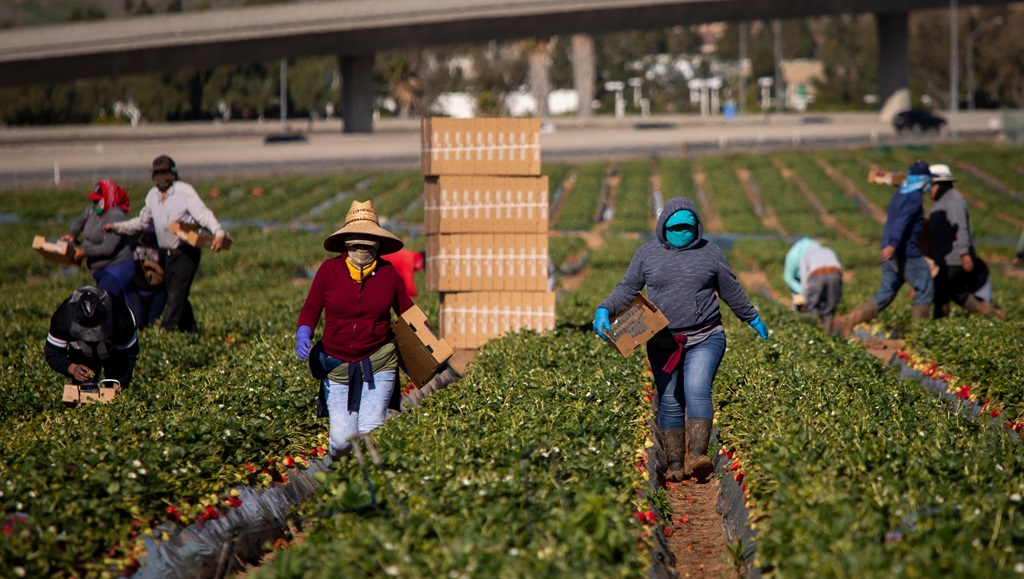
    In April, the Department of Labor (DOL) published an expansive regulation aimed at increasing protections for the growing number of temporary agricultural workers entering the United States on H-2A nonimmigrant visas. A key component of the regulation establishes new protections for H-2A workers to engage in collective action to advocate for themselves or others regarding working conditions.

    Since its publication, four lawsuits have been filed against the DOL by 22 states, several farm owners, and trade associations seeking to block these protections from being enforced.

    The regulation specifically requires employers to certify that they will not intimidate, threaten, or otherwise discriminate or retaliate against agriculture workers for:

    • Engaging or refusing to engage in activities related to self-organization, including any effort to form, join, or assist a labor organization.
    • Engaging or refusing to engage in other concerted activities for the purpose of mutual aid or protection relating to wages or working conditions.
    • Refusing to attend an employer-sponsored meeting with the employer where the primary purpose is to communicate the employer’s opinion concerning this protected activity.

    As justification for the regulation, DOL has emphasized that H-2A workers are particularly vulnerable to exploitation. In fiscal year 2022, its Wage and Hour Division (WHD) conducted 420 investigations of employers using the H-2A program, which resulted in nearly $10 million assessed in back wages and civil monetary penalties. However, the Economic Policy Institute recently found that since 2000, WHD investigations have plummeted by over 60 percent culminating in a record low number in 2022.

    Monitoring compliance is challenging for the DOL as the use of the H-2A program by U.S. agricultural employers has exploded in the past few years. Between 2017 and 2022, the number of H-2A jobs approved or certified by the DOL grew from 224,965 to 370,628, a sevenfold increase from the early 2000s when certified jobs ranged between 40,000 and 50,000. Despite this growth, the total number of agricultural jobs has remained stable since the 1990s, meaning U.S.-based farmworkers now make up a smaller share of the labor force.

    One key role played by the DOL in the H-2A program is to ensure that the employment of nonimmigrant agricultural workers will not adversely affect U.S.-based ones. The DOL has stated that the new regulation is needed partly because of the increased presence of H-2A workers, who are particularly vulnerable due to the temporary nature of their employment, their geographic isolation, and dependency on a single employer. The DOL noted that without collective action protections for H-2A workers to enforce the terms of their visas without the fear of retaliation, the rights of U.S.-based workers at those same worksites could be negatively impacted.

    However, these provisions have sparked several lawsuits. Kansas and sixteen other states filed the first lawsuit w alongside a Georgia-based farm and trade association, in June. In, Kansas v. U.S. Department of Labor, the states argued that DOL did not have the authority under immigration law to impose these new requirements on employers. Similarly, the plaintiffs also argued that the DOL could not create new rights for agricultural workers, even if the farmworkers were part of the H-2A program. Since the 1930s enactment of the National Labor Relations Act (NLRA), the principal federal law governing collective action at the workplace, agricultural workers have been explicitly cut out of those protections.

    While the district court found the DOL had the regulatory authority to impose the new collective action protections through its role in “balanc[ing] the competing goals” of providing an adequate labor supply while protecting the jobs of domestic workers, ultimately it found that the rule conflicted with the NLRA and was therefore unconstitutional. The judge issued a preliminary injunction but refused to expand the effect of the ruling nationwide. Instead, it was limited to the plaintiffs in the case: the seventeen states and the two private entities.

    Initially, the DOL announced a temporary pause to the implementation of the rule, but on September 10 decided to implement a bifurcated system—applying the new rule to states not covered by the injunction and pausing its implementation on those covered by the Kansas case. This caused several industry groups, including the National Council of Agricultural Employers (NCAE) and the U.S. Chamber of Commerce, to file their own lawsuits. Alabama, Kentucky, Ohio, and West Virginia intervened to join as plaintiffs in NCAE’s case while Mississippi is a named plaintiff in the U.S. Chamber’s. In total, there are four lawsuits, including another led by the North Carolina Farm Bureau, pending against the DOL’s new rule.

    Each lawsuit questions the DOL’s authority to impose the new collective action protections. Given the current bifurcated H-2A application process, some plaintiffs are calling on the district courts to issue a national order to halt the DOL rule citing “practical challenges” for multi-state businesses, which are required to submit separate applications if they have a worksite in one of the 17 states covered by the Kansas injunction and another in one of the other 33 states.

    Soon, we may learn whether the DOL’s divided H-2A application system will remain in place or if the rule will be halted nationwide, as the NCAE’s request for a preliminary injunction is scheduled for a hearing in November. Despite these legal battles, the H-2A program remains vital due to chronic labor shortages in agriculture. Participation continues to grow, even though the program is often considered cumbersome and costly by farmers and high-profile cases of labor abuses have emerged from the program.

    FILED UNDER: Department of Labor

    Source link

    Share. Facebook Twitter Pinterest LinkedIn WhatsApp

    Related Posts

    Job Board

    H-1B $100K Fee Struck Down: What Employers Must Know

    Job Board

    EB-2 India Visa Limit Reached for FY 2026: What Applicants Need to Know

    Job Board

    E-2 Visa Success Story: Expanding a Canadian Luxury Design Brand into the U.S. Market

    Job Board

    New DOL Rule Would Raise H-1B Wages to 34th-88th Percentile: What Employers Should Do Now

    Job Board

    E-2 Visa Success Story: Building a Professional Sports Platform in the United States

    Job Board

    Big Changes Coming to Form AR-11: What USCIS’s Proposed Update Means for You

    Job Board

    Immigration Options for Startup Founders Moving to the U.S.: O-1, E-2, and EB-2 NIW

    Job Board

    Goodbye “Duration of Status”? What the DHS Proposed Rule Means for F-1, J-1, and I Visa Holders

    Stay In Touch
    • Facebook
    • Twitter
    • Instagram
    • Pinterest
    Productivity

    How to measure what really matters

    13 What if the way you have been measuring productivity is quietly draining your business…

    From Spain to schnitzel, UF Engineering’s study-abroad program reaches new heights – News

    Outsourcing red flags: Signs you need a productivity intervention

    Top 5 Cities for Finance Internships Abroad

    Top Insights
    Study Abroad

    Top Places to Study Romance Languages Abroad

    Study Abroad

    IU’s study abroad programs rank fourth nationally and first in Big Ten

    Study Abroad

    Study Abroad Programs Offering Environmental Studies Classes

    Study Abroad

    Making your university application stand out

    Study Abroad

    Top Winter Study Abroad Programs in 2024

    Most Popular
    Study Abroad

    NEW! Study Abroad in London at the University of Westminster

    Job Board

    L-1 Visa: Qualifying Relationship & Qualifying Employment Requirements

    Study Abroad

    Eight UAB students will study abroad as 2024 Gilman Scholars – News

    Categories
    • Business (61)
    • Job Board (365)
    • Job Search (63)
    • Management (55)
    • Offshoring (58)
    • Productivity (149)
    • Remote Teams (59)
    • Remote Work (286)
    • Study Abroad (1,998)
    Our Picks

    How to send money to Poland with minimum fees

    Job Board

    The 2024 guide to omnichannel contact centers

    Offshoring

    Prospect survey points to key factors in study abroad planning for 2024 – ICEF Monitor

    Study Abroad
    FarAwayJobs
    Facebook X (Twitter) Instagram Pinterest
    • Home
    • Job Board
    • About Us
    • Contact us
    • Privacy Policy
    • Terms & Conditions
    © 2026 FarAwayJobs.

    Type above and press Enter to search. Press Esc to cancel.