

On April 29, the Department of Labor (DOL) published a new rule aimed at protecting workers on temporary H-2A visas and strengthening the agency’s oversight of their employers. The rule is set to go into effect on June 28, with a two-month subsequent grace period.
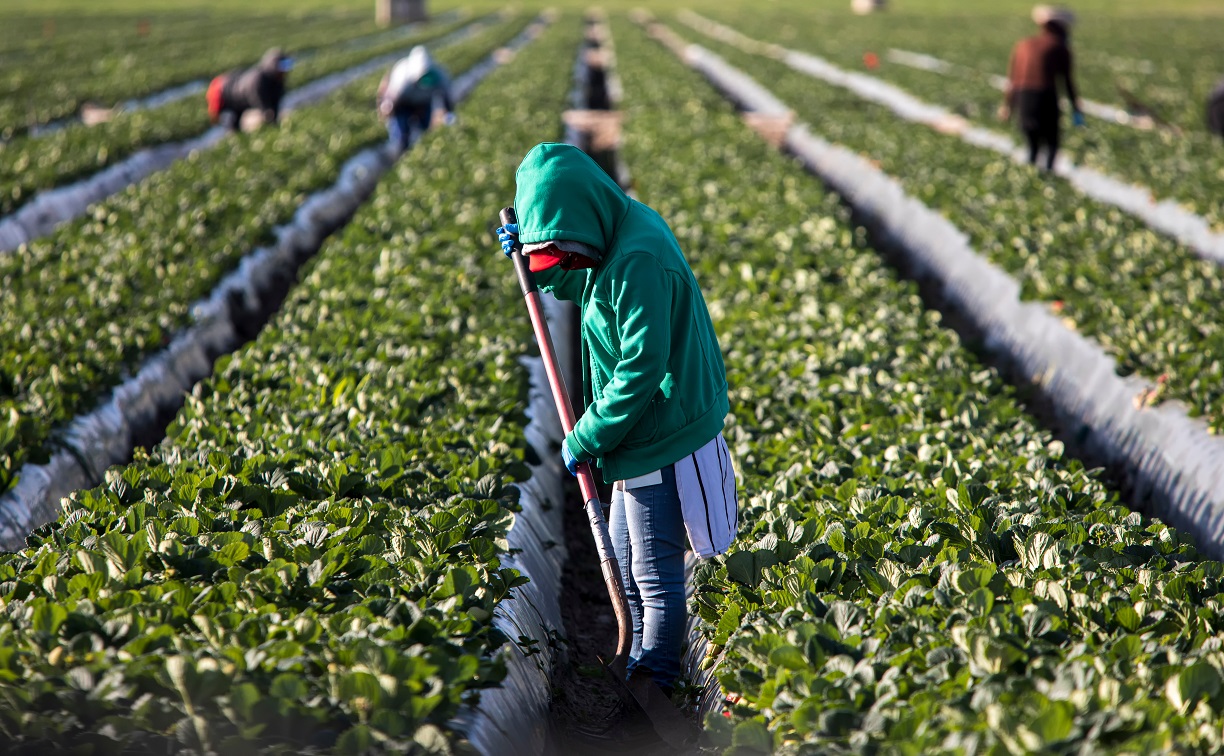
The H-2A program allows migrant laborers to work in temporary or seasonal agricultural jobs in the United States for employers that are unable to find enough U.S.-based workers. The program has grown significantly in the past few years, as the country goes through an extended labor shortage. Last year, the Office of Foreign Labor Certification certified nearly 380,000 jobs compared to just 79,000 in 2010. Unlike the H-2B program, which allows migrants to work temporarily in non-agricultural jobs, the H-2A program doesn’t have a cap on the number of workers who may qualify.
The program’s growth has also spurred renewed attention to concerns about exploitation of migrant workers. For example, a report by Polaris, which provides services to survivors of human trafficking, found that 2,841 H-2A workers had experienced labor trafficking between 2018 and 2020. And a multi-year federal investigation called “Operation Blooming Onion” found that employers in Georgia, Florida, and Texas exploited H-2A workers. The investigation resulted in two dozen people charged with offenses related to engaging in forced labor, rape, kidnapping, and money laundering.
The Biden administration has published several regulations to reign in bad practices while providing migrant laborers more flexibility. In October 2022, DOL published a rule that increased standards for mandatory housing for workers and clarified the liability faced by employers who jointly employ H-2A workers. In September 2023, DHS issued a notice of public rulemaking (NPRM) to provide H-2A and H-2B workers more flexibility when seeking new employment without having to leave the country, and increased consequences for employers who charged workers illegal fees.
DOL’s newly issued rule further expands protections for migrant workers and aims to enhance transparency in the application process and strengthen enforcement and oversight.
Expanded Worker Protections
Since the 1930s, agricultural workers and domestic workers have been carved out of the National Labor Relations Act’s (NLRA) protections for collective action. DOL’s new rule expands similar protections by allowing agricultural workers to engage in “collective action and concerted activity for mutual aid and protection.” The rule aims to ensure that, despite the NLRA’s carve out of agricultural workers, that H-2A workers are provided protections to organize against unfair treatment by employers.
In addition, the rule establishes several new standards aimed at protecting workers from surprise requirements and unjust terminations. For example, it adopts five new criteria that must be satisfied before an H-2A laborer can be fired. This is to ensure that employers do not arbitrarily terminate workers based on pretextual reasons. The rule also requires employers to provide the minimum productivity standards, wage rates, and overtime opportunities before an H-2A worker can accept a job. These regulations are aimed at preventing employers from raising standards post-job acceptance, which is a tactic previously used to terminate workers unable to meet them.
The rule also explicitly prohibits employers from withholding migrant laborers’ passports or other immigration documents. This practice is often used to intimidate workers and prevent them from leaving their employment or from reporting an employer’s unlawful practices.
Enhanced Transparency in the Application Process
The H-2A rule also increases the types of information and documentation that employers must file during the H-2A process. Employers will be required to provide a copy of all agreements they have with agents or recruiters and to disclose the identity of their recruiters or agents to DOL. This information is often difficult to track given the complexity of recruitment networks. DOL previously only requested this information during an audit or investigation. However, this change allows DOL’s agents to know who is involved in the recruitment chain from the beginning of the application process without having to later request it.
Also, DOL will require employers to provide the identity and contact information for managers or supervisors of H-2A workers and the previous business names, if any, that the employer operated under for the past three years. DOL agents will be able to easily identify managers and businesses who allegedly violated H-2A regulations.
Strengthened Employer Oversight
The DOL rule also streamlines the DOL’s ability to deny labor certifications to businesses who attempt to sell their company assets and re-incorporate as a new entity after the previous business is banned or “debarred” for violations of H-2A regulations. Previously, DOL’s Wage and Hour Division had to make a specific finding that the new entity was a “successor in interest” of a previously debarred company before such a denial. However, the new rule will eliminate that requirement and allow for a more immediate debarment of the successor company.
In addition, DOL is adopting a definition for a “single employer,” which will allow it to use a list of factors to determine if multiple nominally separated employers are acting as one. In the past, some employers divided their businesses among separate entities and requested temporary labor certifications while collectively obtaining year-round H-2A laborers. This new definition is meant to allow DOL to more readily identify when employers are engaging in this practice.
What is the new H-2A rule’s impact?
The agricultural industry is heavily reliant on immigrant workers with 86% of its workforce being foreign-born. The Center for Migration Studies estimates that as many as 45% of these workers are undocumented. Employers’ increased reliance on H-2A laborers has been spurred by several factors, including decreased Mexican migration in the decade after the Great Recession, increased immigration status-related legislation at the state level, and increased experience with the program by some employers.
Nevertheless, the H-2A program’s bureaucracies prevent many farmers, especially small ones, from simply replacing U.S.-based immigrant workers with H-2A guest workers. Businesses in Florida have struggled to meet the costs of the H-2A program after the enactment of Florida’s SB 1718 last year. That law punishes employers who use undocumented labor and criminalizes the transportation of undocumented migrants into the state. As a result, many immigrant workers left the state, straining an already burdened agricultural industry.
However, the H-2A program’s red tape is partly by design—to protect U.S.-based workers. As Biden tries to strike a balance between worker protections and employer need, it’s important to remember that these programs are meant to address temporary labor shortages, not year-round and enduring employer needs. As chronic and severe labor shortages continue to impact many states, the country must look toward legislation that provides long-term solutions and flexibility for both workers and employers.
FILED UNDER: Department of Labor, H-2A