
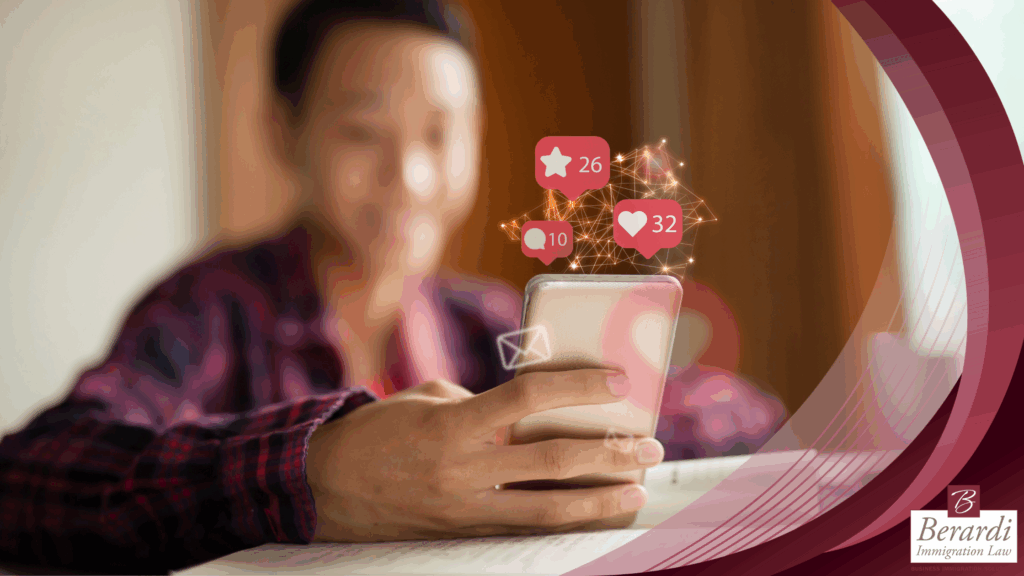
Beginning December 15, 2025, individuals attending H-1B or H-4 consular appointments abroad must ensure their social media accounts are set to public. Yes, public. This new screening measure is now part of the Department of State’s vetting process and mirrors similar requirements already implemented for F, M, and J visa applicants earlier this year.
If you have an upcoming appointment, this update affects you immediately and could delay your visa if ignored at a time when delays are already mounting.
Applicants should also be aware of increasing reports of H-1B and H-4 visa interviews being canceled or pushed months out, in some cases not rescheduled until April 2026. These disruptions appear to be tied to enhanced vetting procedures, staffing constraints, and new screening requirements, including social media review.
“These policies are evolving fast, and applicants cannot afford to be caught off guard,” says Rosanna Berardi, Esq., Managing Partner of Berardi Immigration Law. “Between heightened screening and widespread interview backlogs, even a small oversight like forgetting to adjust your privacy settings can derail an already hard-to-secure visa appointment.”
Why Are Social Media Accounts Being Reviewed?
The U.S. government continues to expand its security and identity-verification procedures. Under the new guidelines:
- Consular officers may search for your social media profiles before your interview
- If your accounts are private, officers may delay visa issuance, or pause processing entirely, until verification is complete
- Applicants are expected to ensure their online presence aligns with the information provided in their visa applications
This is not an invitation to reinvent yourself online. It’s about transparency during a more aggressive screening phase.
What You Need to Do Before Your H-1B Consular Appointment
- Set Your Social Media Profiles to Public
This includes any platforms you listed on your DS-160, such as:
- X (formerly Twitter)
- TikTok
- YouTube
- And any other platforms requested
Keep these settings public until your visa is issued.
- Make Sure Your Online Information Is Accurate
Consular officers may compare your digital footprint with your application. Inconsistent job histories, contradictory biographical details, or posts that conflict with your stated purpose of travel can trigger delays or follow-up scrutiny.
- Do Not Delete or Rapidly “Clean Up” Content
Deleting posts right before a visa interview can raise more concerns than it resolves. If you have questions about older content, talk to an immigration attorney before making changes.
After Your Visa Is Issued: Can You Go Back to Private?
Yes. Once your visa is approved, you may restore your normal privacy settings. The requirement applies during the pre-interview screening and adjudication period.
Practical Tips to Reduce Delays in a Backlogged System
Conduct a Quick Self-Audit
Review your main profiles and confirm that:
- Your name matches your application
- Your employment information is current
- Nothing publicly visible conflicts with your immigration status or job offer
Watch for Old Tags and Public Comments
Even neutral profiles can surface unexpected public tags from years ago.
Plan for Delays Even If You Did Everything Right
With visa interviews being canceled or postponed into 2026, applicants should avoid booking non-refundable travel and should prepare employers for potential start-date shifts.
Do Not Wait Until the Last Minute
Changing account visibility the night before your appointment won’t help if officers already attempted, and failed, to verify your profile.
Berardi Immigration Law is closely tracking these developments and proactively advising clients navigating both the new social media requirements and growing consular backlogs. Our goal is to prevent small issues from causing major delays.
H-1B Visa Social Media Profile FAQs
Do I need to make every social media account public or only those listed on my DS-160?
Any account listed on your DS-160, and any account that clearly identifies you, should be set to public. If an officer can find it, they may review it.
Will consular officers read through all my posts?
Not typically. Reviews generally focus on identity verification, consistency, and red flags, not casual personal content.
Can my visa be denied based on social media content?
Yes, if posts raise concerns about fraud, misrepresentation, security risks, or violations of immigration status. Most applicants have no issues when their online presence matches their application.
Bottom Line: Expect More Scrutiny and Fewer Second Chances
This requirement sounds simple: set your profiles to public. But in today’s environment of enhanced vetting, interview cancellations, and months-long delays, it carries real consequences. Your online presence is now part of your visa file.
If you’re concerned about your social media history, a canceled interview, or an appointment pushed well into 2026, Berardi Immigration Law can help you navigate what’s next with clarity and confidence. Click here to book your consultation today.